
AI Recipe Generator: Turn What’s in Your Fridge Into Dinner Tonight
Ever open the fridge at six o’clock and stare at a random mix of leftovers with no idea what to make? An AI recipe generator is a cooking tool that uses a large language model — trained on millions of recipes — to turn whatever you already have into a real, step-by-step dish in seconds.
There’s no more staring into the fridge wondering what goes with what. Tell it what you’ve got, your diet, and how much time you have, and it hands back a recipe made just for you, friendly and fuss-free.

What Is an AI Recipe Generator?
An AI recipe generator — also called an AI recipe maker, AI cooking assistant, or personal AI chef — is a tool that builds a recipe around you, rather than pulling one out of a database. Instead of searching for something that already exists, it forms a new combination based on your ingredients, diet, available time, and skill level. Think of it less like a search engine and more like a kitchen copilot that starts from scratch every time.
It creates, it doesn’t just search
That distinction matters more than it sounds. A search box can only hand you a recipe someone else already wrote, which means you’re stuck adapting it to whatever is actually in your kitchen. An AI recipe generator instead formulates the dish itself, drawing on patterns learned from an enormous library of recipes to figure out which flavors and textures tend to work well together.
Because it’s generating rather than retrieving, it can respond to oddly specific requests — three eggs, half an onion, and a wedge of cheddar — without needing an exact match to already exist somewhere online. That flexibility is the whole appeal for a lot of home cooks.

How Does an AI Recipe Generator Work?
Under the hood, the language model has been trained on millions of recipes, so it has a strong sense of which ingredients pair naturally and which cooking methods suit them. Most tools follow a similar four-part process: analyze the ingredients you provide, map out which flavors complement each other, formulate the actual recipe, and then estimate its nutritional profile. That pipeline is the quiet engine behind the ai recipe generator experience, even when the interface feels as simple as typing a sentence.
From ingredients, a photo, or a quick prompt
You can usually feed an AI recipe generator in a few different ways:
- Type a plain list of what’s in your fridge or pantry
- Snap a photo of your ingredients — computer vision on many tools claims to recognize hundreds of common items with better than 90% accuracy (vendors often advertise upwards of 95%, though that figure is self-reported rather than independently benchmarked)
- Just describe the situation in your own words, like “leftover salmon and broccoli — what can I make?”
All three routes lead to the same place: a tailored recipe built around what you actually have on hand.
The AI writes quantities, steps, times, and temps
The output isn’t just a vague idea — it’s a full recipe, with ingredient quantities, numbered steps, cook time, temperature, and serving size all spelled out. That said, it’s worth treating those numbers as a strong starting point rather than gospel; we’ll get into why temperature and timing deserve a quick double-check in the food-safety section below.
What Can an AI Recipe Generator Do?
Turn leftovers into an actual dinner. This is the core use case: instead of ingredients going bad in the crisper drawer, the tool builds a real dish around what you already have, which cuts down on food waste and decision fatigue at the same time.
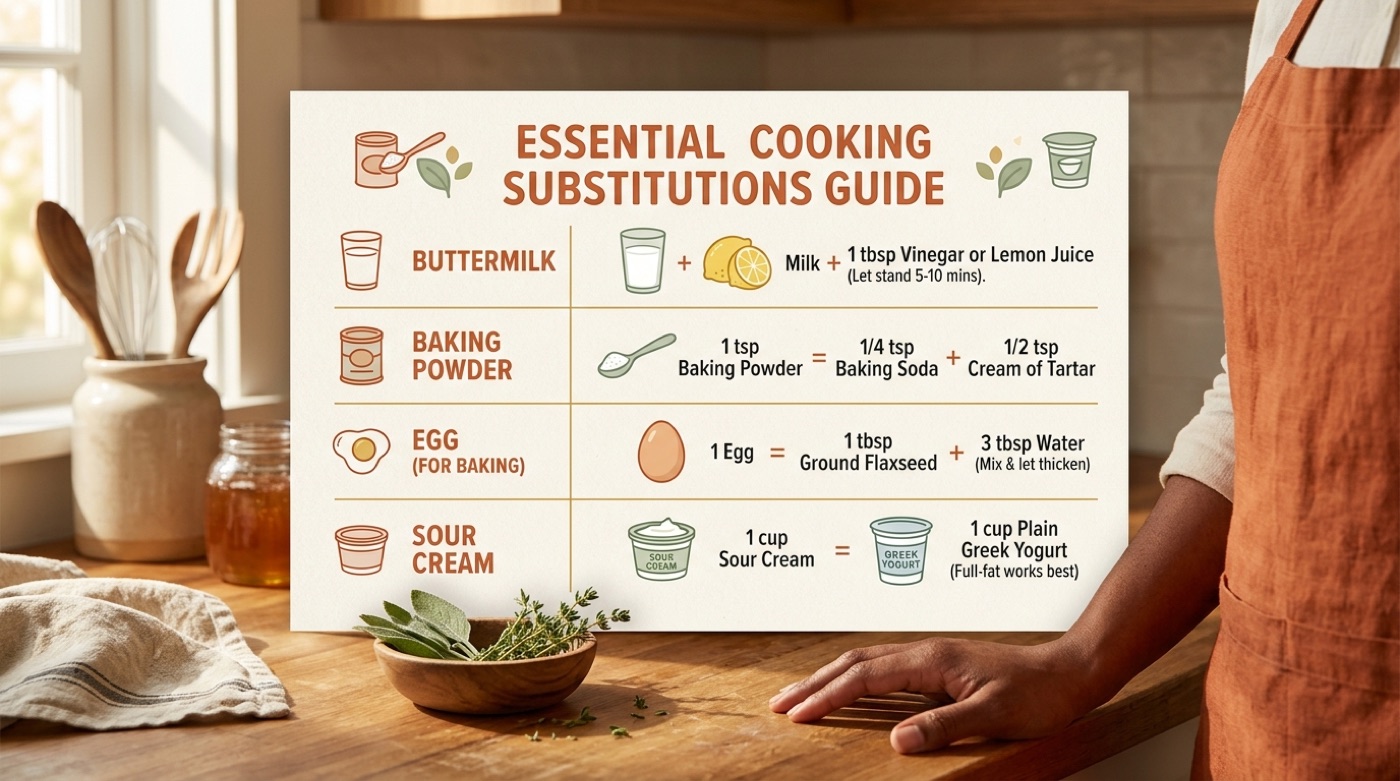
Suggest smart substitutions. Out of buttermilk? Short on an obscure spice? A good AI recipe generator will suggest a swap — milk plus a splash of lemon juice, for instance — instead of leaving you to guess or run to the store.
Put together meal plans and shopping lists. Beyond single recipes, many tools can build out a full week of meals and generate a shopping list to match. Cuisine style and difficulty level (easy, medium, hard) are usually selectable too, so a Tuesday-night dinner and a weekend project don’t get treated the same way.
Taken together, a typical AI recipe generator can handle:
- A full recipe built from whatever ingredients you list or photograph
- Ingredient substitutions when something’s missing
- A weekly meal plan with a matching shopping list
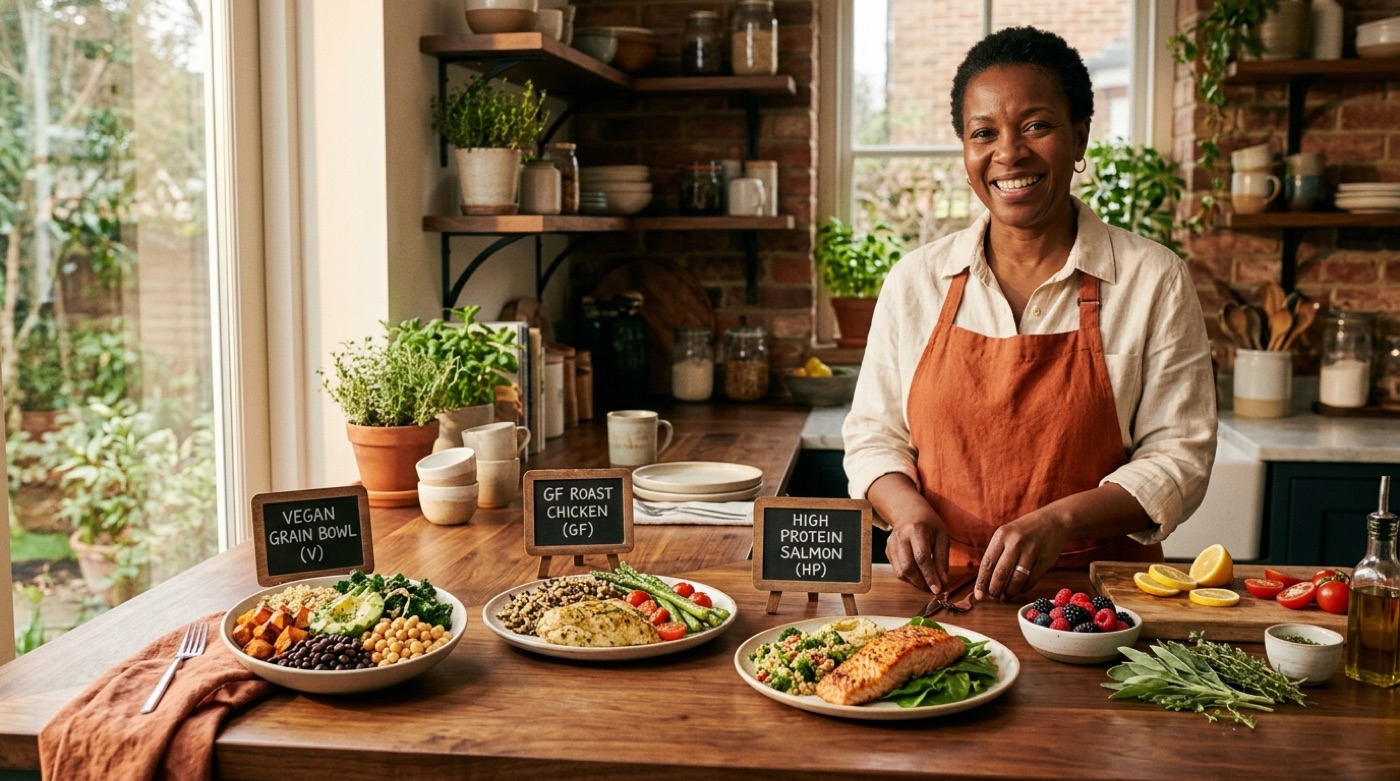
- Dietary variations, including vegan, keto, gluten-free, dairy-free, or low-carb
- Estimated nutrition and macros for each dish
Can It Handle Diets, Allergies, and Nutrition?
Dietary restrictions and allergies are typically entered as constraints up front, and nutrient estimates are often pulled from standard food-composition data. That said, here’s a friendly food-safety note worth taking seriously: if you’re cooking around an allergy, always double-check labels yourself against the FDA’s list of major food allergens — an AI tool may not catch a hidden ingredient or the risk of cross-contact in your own kitchen. For general plate balance and nutrition guidance, the Harvard Healthy Eating Plate is a solid, independent reference to keep in mind.
Allergies: helpful, but double-check
An AI recipe generator is genuinely good at leaving out an allergen you’ve flagged — no peanuts means no peanuts in the ingredient list. Where it can fall short is with hidden sources: soy lurking in a bottled sauce, tree nuts in a cooking oil, gluten in a thickener. None of that is a reason to avoid these tools; it’s just a reason to give the final ingredient list one last human read-through, especially for a severe allergy.
How Much Does an AI Recipe Generator Cost?
Pricing varies, but the good news is that a basic tier is free and often doesn’t require creating an account at all — you can try before you commit to anything. Paid tiers generally unlock more generations per week, faster results, or extra features like meal planning and nutrition tracking.
| Tier | Typical price | What you get |
|---|---|---|
| Free / Basic | $0, often no sign-up | Limited recipe generations per week |
| Mid tier | Roughly $6-8/month (~$72-96/year) | Higher generation limits, more features |
| Top tier | Roughly $13/month (~$159/year) | Highest limits, priority features |
Those numbers reflect a typical structure in the category (DishGen’s Basic/Premium/Pro plans are one public example), so treat them as a ballpark rather than a universal price list — every tool sets its own tiers.

Is It Safe to Cook AI-Generated Recipes?
Short answer: usually yes, but treat an AI-written recipe as a smart first draft rather than a tested, kitchen-proven one. Some tools even label their output as AI-generated and untested outright, which is honest and worth keeping in mind. The dish itself is rarely the risk — undercooked meat, poultry, or eggs is.
Always cook meat and poultry to a safe internal temperature and check it with a food thermometer rather than guessing by color. As a rough guide: poultry should reach 165°F (74°C), ground meats 160°F (71°C), and whole cuts of beef, pork, or lamb 145°F (63°C) followed by a three-minute rest. For the full breakdown, the USDA’s safe minimum internal temperature chart and FoodSafety.gov’s minimum cooking temperature guide are the two references worth bookmarking.
| Food | Safe minimum internal temperature |
|---|---|
| Poultry (chicken, turkey) | 165°F (74°C) |
| Ground meats (beef, pork, lamb) | 160°F (71°C) |
| Whole cuts of beef, pork, lamb | 145°F (63°C) + 3-minute rest |
| Fish | 145°F (63°C) |
A thermometer takes the guesswork out of all of this — color alone is a notoriously unreliable signal, since meat can look done on the outside well before the center reaches a safe temperature. It’s a two-second check that removes almost all of the actual risk in an AI-generated recipe.
Always use a food thermometer to check whether meat has reached a safe minimum internal temperature that is hot enough to kill harmful germs that cause food poisoning. — FoodSafety.gov
None of this means AI-generated recipes are risky by default. It just means an AI recipe generator doesn’t replace basic kitchen judgment — check the time and temperature, check that ingredients are fresh, and check the allergen list before you serve.
Best-Known AI Recipe Generators Right Now
The landscape splits roughly into two camps. General-purpose assistants like ChatGPT and Microsoft Copilot can generate a recipe from a plain-language prompt, even though recipes aren’t their primary purpose. Alongside them are dedicated recipe apps built specifically for cooking — often with photo-based ingredient recognition, weekly meal planning, and macro tracking built in.
Independent reviews have taken a hands-on look at this space; one outlet tested a dozen tools over more than 50 hours, while another ran its own smaller hands-on comparison. The consistent takeaway across both is that output quality has improved a lot, but a human still gives the final recipe a once-over before cooking — which is exactly the sensible habit this article has been building toward all along.

How to Get Started With an AI Recipe Generator
Getting a good result usually comes down to giving the tool a clear starting point. Here’s a simple flow to follow:
- List what you actually have on hand — proteins, vegetables, pantry staples, whatever’s about to go bad.
- Note any diet or allergy restrictions up front, so they’re built into the recipe from the start.
- Add how much time you have and how many servings you need.
- Generate the recipe, then tweak anything that doesn’t fit — swap an ingredient, adjust the portion size, or ask for an easier version.
A clear, specific prompt beats a vague one every time. Something like “Dinner for 2 with chicken, spinach, and rice, gluten-free, under 30 minutes” gives the tool everything it needs to produce something actually useful on the first try.
A prompt template you can copy
Keep this template handy for next time you’re staring into the fridge:
“I have [ingredients]. Make a [diet] recipe for [servings], ready in [time], [cuisine], [difficulty].”
Explore more AI recipe generator guides
- AI recipe generator from ingredients you have
- AI meal planner: plan a week of meals
- Ingredient substitutions with AI
- AI vegan recipe generator
- AI keto recipe generator
- AI gluten-free recipe generator
- AI high-protein recipe generator
- AI recipe generator from a photo
- Safe internal cooking temperatures
- AI recipe generator from a video
- Common food allergens
Frequently Asked Questions
- What is an AI recipe generator?
It’s a tool that builds a personalized recipe out of your ingredients, diet, and available time — generating something new rather than searching for an existing recipe.
- How does an AI recipe generator work?
A large language model trained on millions of recipes analyzes your ingredients (sometimes from a photo, with vendors often claiming 90%+ recognition accuracy) and produces quantities, steps, cook time, and nutrition estimates.
- Are AI recipe generators free?
Many offer a free tier with no sign-up required. Paid tiers, often around $6-13 a month, typically add higher generation limits, extra features, and priority speed.
- Can AI create a recipe from a photo of ingredients?
Yes — many tools use computer vision to identify ingredients in a photo of your fridge or counter, then build a recipe from what they recognize.
- Is it safe to cook AI-generated recipes?
Usually, yes, but treat the recipe as untested. Always cook meat and poultry to a safe internal temperature checked with a food thermometer, per USDA and FoodSafety.gov guidance.
- Can AI recipe generators handle dietary restrictions and allergies?
Yes — you can specify vegan, keto, gluten-free, dairy-free, or an allergy as a constraint. Still, double-check the final ingredient list yourself against the FDA’s major allergen list for peace of mind.